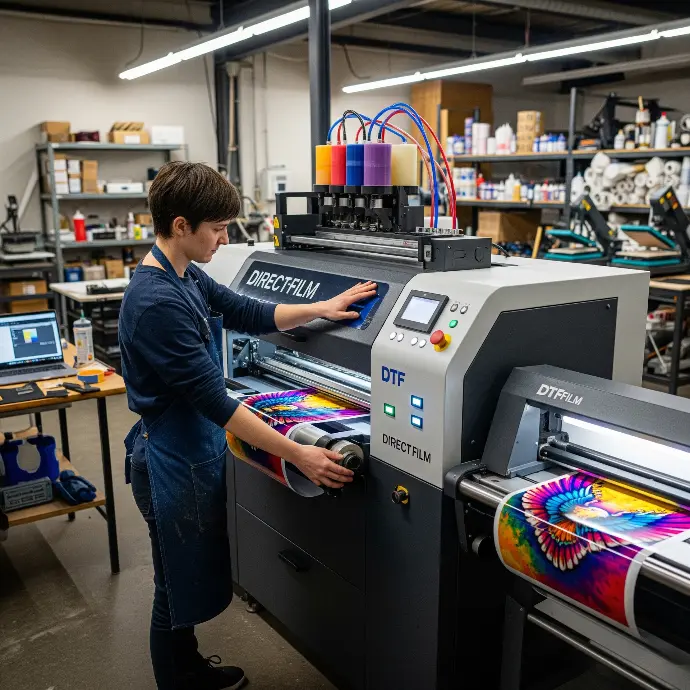
Direct to Film (DTF) Printing: A Revolution in Apparel Customization
Direct to Film (DTF) printing is a rapidly growing technology in the custom apparel industry that allows users to print designs onto special films, which are then transferred onto garments using a heat press. Unlike other methods that are limited by fabric type or color, DTF offers immense versatility and durability.
Direct to Film (DTF)
Direct to Film (DTF) Printing: A Revolution in Apparel Customization Direct
to Film (DTF) printing is a rapidly growing technology in the custom
apparel industry that allows users to print designs onto special films,
which are then transferred onto garments using a heat press. Unlike
other methods that are limited by fabric type or color, DTF offers
immense versatility and durability.
How the DTF Process Works
The DTF process is straightforward yet highly effective, generally involving these key steps:
- Design & Print: The artwork is designed digitally and then printed onto a special PET film using a DTF printer. The printer lays down the CMYK colors first, followed by a layer of white ink on top. This white layer acts as a base, ensuring the colors pop on dark fabrics.
- Powdering: While the ink is still wet, a specially formulated hot-melt adhesive powder is applied to the print. This powder bonds to the wet ink but shakes off the unprinted areas of the film.
- Curing: The film with the powder is passed through a curing oven or heat tunnel. This melts the powder, turning it into a uniform adhesive layer backing the design.
- Transfer: The cured film is placed on the garment (t-shirt, hoodie, hat, etc.) and heat pressed. The heat activates the adhesive, bonding the print to the fabric.
- Peel: After pressing, the film is peeled off (usually after cooling down, known as a "cold peel"), leaving the vibrant design permanently on the fabric.
Key Benefits of DTF Printing
- Versatility: One of the biggest advantages of DTF is that it works on almost any fabric. Whether it’s cotton, polyester, nylon, treated leather, or 50/50 blends, DTF bonds effectively.
- No Pre-Treatment Required: Unlike Direct-to-Garment (DTG) printing, which often requires dark garments to be pre-treated with a chemical solution, DTF skips this messy and time-consuming step.
- Durability: DTF prints are known for their elasticity and stretchability. They don't crack easily and can withstand many wash cycles without fading or peeling.
- Vibrant Colors: The use of the white ink underbase allows for high-resolution, photo-quality prints with sharp details and bright colors on both light and dark garments.
- Cost-Effective: For small to medium runs, DTF is often more economical than screen printing because it avoids the high setup costs of creating screens.
Everything you need
These key features will make using the best commercial DTG printers a breeze.
JSON Support
Control press operations and other settings. Full control of size and placement of the print. Endless possibilities to create the best printing environment
Print Profiles Management
Create and customize print settings base on machine type and garment type. Set specific print attributes ensuring that the art is consistent.
Barcode
Print and go nothing complicated about this step. Eliminate the need of job jackets and watch as you scan the art loads into the print que like magic.
" Digital flow software streamlines my printing production by automating workflows, reducing errors, and enhancing efficiency, and improved resource management. "